
AUDIO ORIGAMI JOURNAL
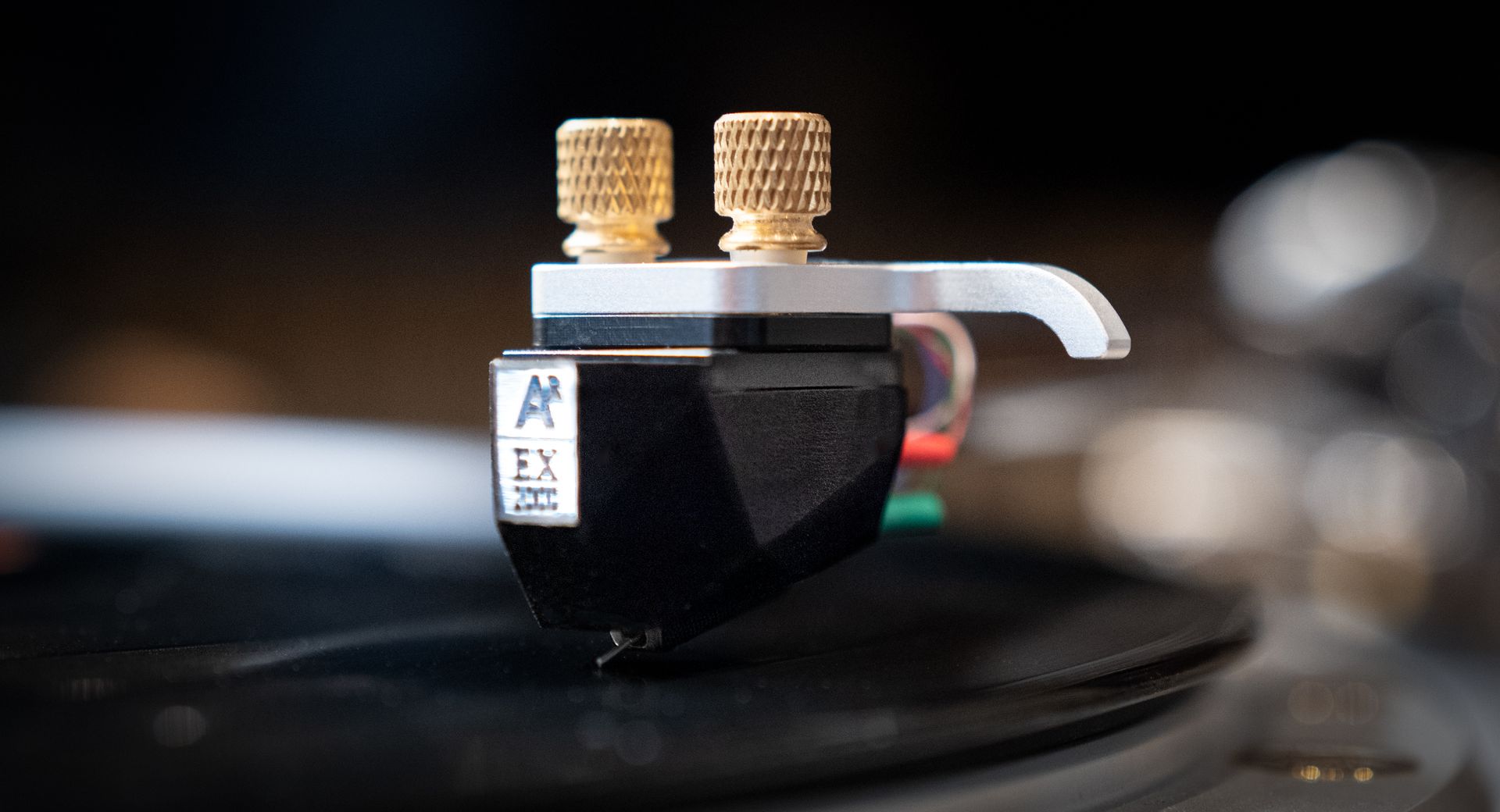
Analogue Relax EX2000 MC Cartridge Review
I guess we are lucky. Because we make high-end tonearms, we need to test them against almost every decent major brand’s models, and as big fans of Analogue Relax cartridges, especially the EX1000, we had to test the new EX2000 on our flagship PU8.
Now, when I say “test,” I mean “buy.” I had heard it briefly at one of our dealers, and to say I was stunned is an understatement, so the purchase was “necessary”.
We’ve had it for a few months now, got around 150 hours on it and, well, at the risk of losing you before the end of the article, it is quite simply the best cartridge we have ever been lucky enough to have grace our 13" PU8.
So, before we get into the nitty-gritty, I’m going to list the specs and price, as I am certain the price will put most people off even listening to it.
Analogue Relax EX2000 Specifications:
- Transducer: MC Stereo Phono Cartridge
- Output voltage: 0.65mv (1kHz)
- Impedance: 8.8Ω
- Tracking force: 2.1g (Recommended)
- Channel Separation: 27dB or more (1kHz)
- Channel Balance: within 0.5dB (1kHz)
- Compliance: 6μm/mN (100Hz)
- Stylus: Super Curve Line Contact Ver. 3 (Pure diamond)
- Cantilever: Special nude diamond
- Coil material: High-purity copper
- Body: South Tyrol spruce
- Weight: approx 14.0g
- Price: £15,000 / $22,000 / €17,300
Analogue Relax does not state a recommended loading, and quite rightly, as everyone’s internal tonearm wires and phono cables differ and can change the results, but we found loading at 100Ω was spot on.
At 0.65mv, the EX2000 has a genuinely generous output for a moving coil of this calibre. This means you can afford to turn the gain down on your phonostage rather than running it flat out. We found this gave us the best performance, with a quieter background and a touch more headroom than you’d get from a typical low-output MC pushed to its limit. If your phonostage offers a range of gain settings, don’t be afraid to experiment downward.
Fitting the EX2000 is a cinch. As with all Analogue Relax cartridges, aligning the cantilever to your protractor is easy, as you can clearly see the entire assembly as it protrudes from the bottom cut of the body. There is no peering under the body with a magnifying glass. This saves you a good thirty minutes. The channel pins are standard width and will cause no issues with normal cartridge tags.
With a cartridge of this calibre, trying to achieve perfection without a proper protractor, such as a Dr Feickert Next Generation or a SMARTractor, is just stupidity. These tools exist to achieve perfection, and a cartridge at this price demands them.
Once we had the EX2000 mounted and aligned, we sat down to listen to a few albums and were really surprised by how well it performed right out of the box. It needs around 75-100 hours to really open up, but from the get-go it was clearly superior to the EX1000. However, we tried not to judge it at this point and, over the next month, gave it plenty of time to settle properly. There is a difference after a run-in, but it’s not as pronounced as with most cartridges. It is supremely enjoyable from the first minute.
Once fully run in, we sat down one Tuesday afternoon to listen properly, run our test tracks (listed below) and compare it to the following cartridges:
- Benz Micro LP/S - £3,200
- Dynavector DRT XV-1t - £6,500
- Hana Umami Black - £8,000
- Analogue Relax EX1000 - £11,000
Now it might seem unfair to compare a £15,000 cartridge to a £3,200 offering, but we did this for two reasons:
- You might have heard one of the comparison cartridges.
- We want to highlight the performance-versus-price differences.
Our first notes went something like this:
“This is not what I expected from a diamond cantilever”
“This is not ‘modern’ hi-fi”
“This is not etched and tiring”
You can work out from those three statements what the EX2000 is all about. It does not follow the modern trend of focusing on every last detail, it is not what modern reviewers would call “neutral”, and it is far from fatiguing.
In contrast, the EX2000 focuses solely on natural playback. It leans a smidge on the warm side, and it focuses on the midrange, where 65% of the musical information is.
But do not, for a moment, think it is not detailed or that it cannot do bass. It is the most natural cartridge we have ever heard in the highs. The details are all there, but they are not overly highlighted; they just become part of the playback. You notice them, but you don’t concentrate on them. The bass is easily the most textured, deep and layered we have ever heard. It’s quite astounding and delivers a serious punch, but again, the EX2000 seems to make the lows part of the whole rather than a separate entity.
Overall (and I hate to use this word), the EX2000 is by far the most “musical” cartridge we have experienced. It is so pleasing that you really struggle to analyse it. It just sucks you so far into the music, so quickly, that you forget to take notes. In fact, we have had a few clients and friends down to hear it, and they are genuinely speechless when you ask them what they think.
Analogue Relax places a lot of weight on the body material, choosing woods known for their tone and, in the case of the EX2000, spruce from the same forest that supplied the wood for the legendary Stradivarius violin. This runs counter to our belief at Audio Origami that materials that reduce resonance should be chosen. Still, here we bow to the proven knowledge of Analogue Relax, as the performance cannot be faulted.
The EX2000 sports a diamond cantilever, and our experience with them is mixed. They can sound too etched or too bright, and in many cases, the old adage “just because you can doesn’t mean you should” could be applied to many diamond cantilever offerings. But for the EX2000, using a diamond in the cantilever seems appropriate. It’s faster, but by no means does it become bright or fatiguing.
The Comparisons...
EX2000 versus Benz Micro LP/S
I adore the Benz Micro LP/S. It is the best-value cartridge on earth. It is deep, layered and detailed, even if it is a real bitch to set up.
The sound signature of the LP/S is similar to the EX2000. It is slightly on the warm side and designed for long listening sessions. It’s a cart that doesn’t disappoint with any genre of music. If you make the comfy car comparison, the LP/S is a comfy old Mercedes 500SL. Reliable, comfortable, capable. The EX2000 is a Range Rover SV. Faster, much more capable and much more enjoyable.
EX2000 versus Dynavector DRT XV-1t
The Dynavector DRT XV-1t is our standard test cartridge. It is so reliable, so “right” that we use it to test every tonearm we make before we ship them. It is just off-neutral towards the warm side, very open, revealing, and very honest. I could happily live with the 1t for the rest of my life. But it doesn’t deliver the beauty, romance, speed or depth that the EX2000 does. Not even close. So, in the comfy car comparison, the Dynavector DRT XV-1t is a modern Mercedes-Benz GLC 300 Coupé, and the EX2000 remains the Range Rover SV.
EX2000 versus Hana Umami Black
This was the interesting and unexpected result.
The Umami Black is a fine cartridge and will suit people looking for impressive detail, but that comes at the cost of beauty and romance. It’s bright, not as bright as a Lyra, but bright all the same. It’s not as mid-centric as the EX2000, nowhere near as easy to listen to, and can get fatiguing. In our previous review of this cartridge, we stated that it would be a great cartridge on a second tonearm, but it quite simply doesn’t achieve the balance, poise, and finesse of the EX2000.
Let’s do sports cars this time: the Umami Black is a Nissan GT-R Nismo, fast, accurate, edgy and needs a good track (read “ultra clean vinyl”) to shine. The EX2000 is a Porsche 911 Turbo. It can do race tracks for breakfast, but you can take it to the shops just as well, and you’ll never get bored with it because it performs at the top level, and yet you can drive it with slippers on.
EX2000 versus Analogue Relax EX1000
The Analogue Relax EX1000 was, until the arrival of the EX2000, our favourite cartridge of all time. Both cartridges share the same house sound of slight warmth, maximum musicality (apologies again) and an ability to extract detail without it becoming painful. Both throw a wonderful, large, deep, layered stage. But the EX2000 just delivers more of everything perfectly.
Let’s go back to comfy cars. The EX1000 is a Range Rover Autobiography. The EX2000 goes back to being the Range Rover SV. Almost the same car, but noticeably better.
Our reference test tracks:
- Regina Spektor - Up the Mountain
- Mathias Eick - Hem
- Doors - Riders on the Storm
- Dire Straits - You and Your Friend
- Horace Silver - Song for My Father
- Pete Tong & HERO - Café del Mar
- Led Zeppelin - Babe I’m Gonna Leave You
- Max Richter - Winter 1
- Iron Maiden - Remember Tomorrow
- LCD Soundsystem - Other Voices
These are the tracks we use to test all our cartridges, tonearms and general gear. They cover almost every style of music and really test all cartridges’ ability to track and retrieve. But there’s really not much to say here. The EX2000 sailed through them, making them all sound better than we had ever heard them before.
Iron Maiden’s Remember Tomorrow is one track that usually makes decent cartridges struggle. By decent, I mean anything without an elliptical stylus profile. I am not a fan of elliptical profiles, as I feel you miss information deep in the groove, but going deeper into the groove of Remember Tomorrow is usually a mess. The EX2000 went deep and delivered the song in a way that genuinely excited me. I love that track. It’s one of the earliest examples (if not the first) of thrash guitar, and the song develops from a slow, easy start to a full-blown, multiple guitar assault at the end of the second verse, and I usually reserve it for digital playback. The EX2000 handled it beautifully.
Another standout moment for me was with Dire Straits’ “You and Your Friend.” The panning of the guitars at the end of the track was way wider than I have ever experienced it on any system, at any cost, anywhere. I had to keep replaying the track to get my brain around how the guitar sounded like it was coming from outside the left corner of my room.
Now, back to the price...
Yes, it’s £15,000 / $22,000 / €17,300. That is a ton of cash, no matter how much you can afford to blow on a cartridge, so it really comes down to two things: do you spend enough time listening to vinyl to justify it, and does your system justify it?
The first question is easily answered; the second is a little more complicated.
There is no point spending this much money on a cartridge if you don’t have a system that will allow it to perform at its best. That might sound like snobbery, but it’s actually good advice. If your system costs £20,000 total, it is crazy to spend that much on a cartridge when you could spend it on other components that would make a bigger difference.
If, however, you have a well-put-together system over £50,000, then the EX2000 is worth looking at.
If your analogue chain is around the £50k mark (ex cartridge), then the EX2000 could be your best friend.
Review summary...
The Analogue Relax EX2000 has blown my mind. I never thought for a second it would beat the EX1000 by so much. It totally flies in the face of my understanding of the laws of diminishing returns. It is, without a doubt, the best, most fun, and easiest-to-listen-to cartridge I’ve ever had in my listening room. Now, please note the “most fun” part. If you want hyper-etched and detailed, as many do these days, this is not for you. Go and listen to the Hana Umami Black. But if you want beauty, depth, realism, incredible mids, and natural sound, and you have the wallet, this is for sure a cartridge you must hear.
If you do decide the EX2000 is the cartridge for you, then be prepared for a serious lack of sleep because you cannot turn it off at 11pm. It’s a cartridge that will keep you up until dawn and make you talk about it in gushy ways like I just have.
Our Review Kit:
- Turntable: Acoustic Signature Ascona Neo
- Tonearm 1: Audio Origami PU8 13"
- Tonearm 2: Audio Origami PU8 12"
- Phonostage: Accuphase C-47
- Preamp: Accuphase C-3900
- Amplifiers: 4 x Accuphase A-300 vertically biamped
- Speakers: Tannoy Canterbury GR
- Subwoofers: 4 x SVS SB-5000 channel stacked
- Tonearm Cable: Audio Origami Core One
- Interconnects: Atlas Mavros
- Speaker Cables: Duelund Tinned Copper DCA12GA
More Info: https://analogrelax.com/en/product/ex2000/
