
AUDIO ORIGAMI JOURNAL
Pro Tips
PU7 GTS...
Aluminium or Titanium?
We're often asked what the difference is between the PU7 GTS Aluminium and the PU7 GTS Titanium. It's a fair question, and the answer is more nuanced than it might first appear.
The obvious difference: Price!
The titanium version costs £600 more than the aluminium version. The reason for this price difference is straightforward: seamless titanium tube is on average around 15 times more expensive than seamless aluminium tube, and it is significantly harder to cut, machine and finish to the tolerances required in a precision tonearm.
The material science...
Titanium is approximately 60% denser than aluminium and roughly twice as stiff, giving it a superior stiffness-to-weight ratio when you need both rigidity and mass in a compact form. These properties were precisely why we introduced a titanium outer tube on the classic PU7, where a stiffer, more inert armtube resists the micro-vibrations that can colour the signal retrieved by the cartridge.
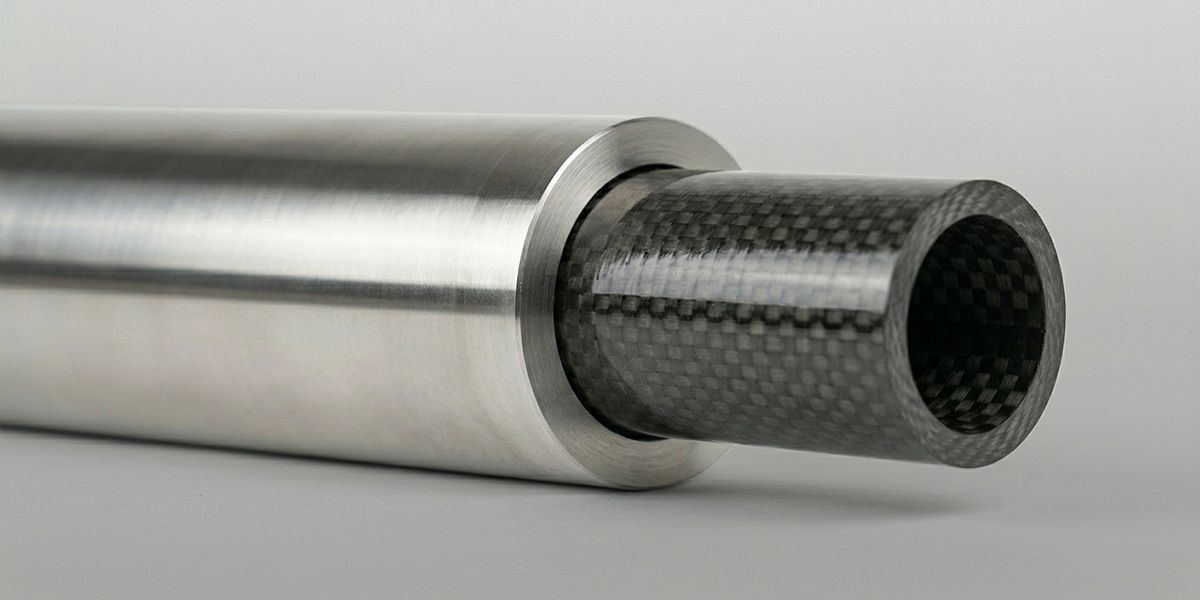
With the arrival of the PU7 GTS, however, the picture changes considerably. The GTS armtube is a constrained-layer-damped structure, comprising an outer tube (titanium or aluminium) bonded to an inner carbon fibre tube via a layer of compliant expanding adhesive. This construction is well established in structural engineering: the two stiff outer layers are separated by a viscoelastic interlayer, which converts vibrational energy into heat rather than allowing it to propagate along the arm. The result is a composite armtube that is stronger, stiffer and far more inert than either material could achieve alone, and frankly more rigid and inert than any tonearm application will ever demand.
In short, the constrained layer construction renders the intrinsic material differences between titanium and aluminium largely irrelevant from a resonance and colouration standpoint.
So why do we still offer both?
The answer comes down entirely to effective mass. Effective mass is the combined inertial load the tonearm presents to the cartridge, determined by the mass of the headshell, armtube and cartridge, weighted by their positions along the arm. Every cartridge has a compliance rating (how easily the stylus deflects), and the effective mass of the arm must be matched to that compliance to produce a resonant frequency falling within the ideal 8 to 12 Hz window. Too low or too high, and the cartridge and arm system will resonate either within the audible range or within the bass frequencies reproduced by the record, degrading both tracking and sound quality.
Because titanium is denser than aluminium, the titanium armtube adds more mass, increasing the overall effective mass. If your cartridge has high compliance and calls for a lighter arm, the PU7 GTS Aluminium is the correct choice. If your cartridge has low compliance and benefits from a higher effective mass to achieve the ideal resonant frequency pairing, the PU7 GTS Titanium is the right option.
Is there an audible difference between the two armtubes?
Now that both armtubes share the same constrained-layer-damped construction, there is no meaningful audible difference between the two versions. Neither imparts any character or tonal flavour on the music, and both are equally rigid and equally inert. Even on highly resolving systems, you will not hear a difference between the two options, provided the effective mass is correctly matched to your cartridge.
To learn more about effective mass and how to choose the right arm for your cartridge, visit: www.audio-origami.co.uk/effective-tonearm-mass-explained
We hope this helps you decide which PU7 GTS version is right for your setup. If you have any further questions, feel free to get in touch at
stephen@audio-origami.co.uk
