
AUDIO ORIGAMI JOURNAL
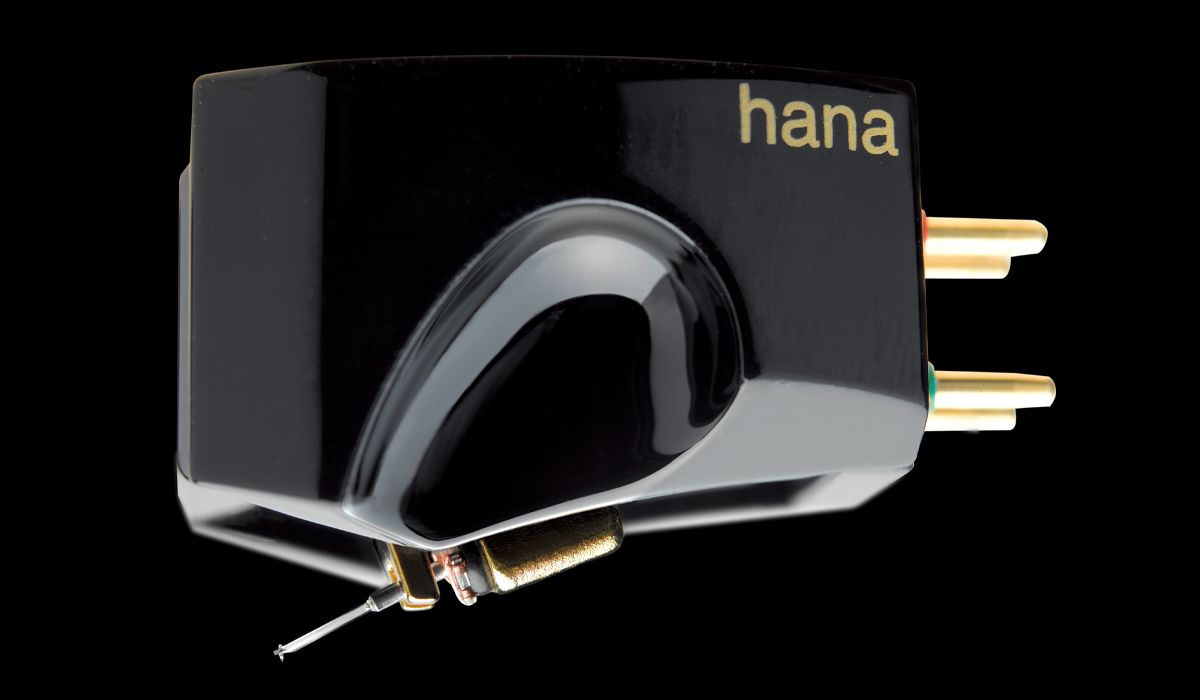
Hana Umami Black Review
Audio Origami discover a new flavour...
For years, we have owned both the Hana ML and the Hana Umami Red, and we still consider them two of the best value moving-coil cartridges at their respective price points. In our experience, both comfortably compete with cartridges costing far more. They also share a broadly similar sonic character: fast, well-controlled bass, a natural and unforced midrange, and a beautifully rounded, non-fatiguing treble. Where they differ is in refinement.
When Hana announced the Umami Black in September 2025, we knew it was only a matter of time before one arrived here. Hana has a consistent track record of delivering better performance than its pricing suggests, so expectations for the £8,000 Umami Black were naturally high.
A while back we took delivery of our Umami Black and got it running immediately. Cartridge run-in is not something we particularly enjoy. Listening critically during that period can cloud judgement, either by focusing on change rather than performance, or by gradually acclimatising to a sound that is not yet fully formed.
Our solution is simple. We set new cartridges up on one turntable and let them play while we listen to music on another deck. We do check in occasionally during the process, and with the Umami Black, we noticed the midrange and bass filling out and gaining authority, but for the first 50 hours, we deliberately avoided extended listening.
In our system, the Umami Black took just over 40 hours to reach a largely settled state, although we would expect it to continue to improve marginally over the next 30 to 40 hours. This review is based on approximately 30 hours of listening over 5 days once the cartridge was run in.
Our Review Process
To give some structure to this review, we selected ten reference tracks and played each of them using the Umami Black, then repeated the same tracks with the two comparison cartridges listed below. The Umami Black was initially installed on our Technics SP-10R, while the comparison cartridges were mounted on the Pure Fidelity Symphony. Once those sessions were complete, we swapped the cartridges between the two turntables, fitting the Umami Black to the Symphony and moving the comparison cartridges to the SP-10R.
As you can imagine, this process took several days and relied heavily on careful note-taking. However, as we moved between cartridges, turntables and records, a very clear picture began to emerge.
Rather than listing results for every cartridge on every record, we will focus on a summary of what we feel the Umami Black does particularly well, highlighting a handful of tracks where it was clearly outstanding, as well as those where it was less convincing.
Please note that the system used for this review (listed below) leans slightly to the warm side. Accuphase amplification is known for its depth, texture, and warmth, and while the Canterbury speakers help balance this, the overall presentation sits a few degrees off absolute neutrality. This should be taken into account when considering our findings.
Comparison Cartridges:
- Hana Umami Red - £3,400
- Analogue Relax EX1000 - £11,000
Reference Test Tracks:
- Regina Spektor - Up the Mountain
- Mathias Eick - Hem
- Doors - Riders on the Storm
- Dire Straits - You and Your Friend
- Horace Silver - Song for My Father
- Pete Tong & HERO - Café del Mar
- Led Zeppelin - Babe I’m Gonna Leave You
- Max Richter - Winter 1
- Iron Maiden - Remember Tomorrow
- LCD Soundsystem - Other Voices
Our Review Kit:
- Turntable 1: Technics SP10R
- Turntable 2: Pure Fidelity Symphony
- Tonearms: Audio Origami PU8 12” and 13”
- Phonostage: Accuphase C-47
- Preamp: Accuphase C-3900
- Amplifiers: 4 x Accuphase A-300 vertically biamped
- Speakers: Tannoy Canterbury GR
- Subwoofers: SVS SB-5000
- Tonearm Cable : Audio Origami Core One
- Interconnects: Atlas Mavros
- Speaker Cables: Atlas Mavros
What is the Hana Umami Black?
Well, the long and short of it is, it’s a super-cart. Ok, so what is a super-cart? The general idea of a super-cart is one that concentrates on rigid cantilever materials, advanced stylus profiles, hand-wound or precision-matched coils, very tight channel balance and separation tolerances and a body designed to control resonance aggressively.
Normally super-carts start at £10,000 and go upward to around £20,000, however in the Umami Black’s case it is only £8,000. Hana probably manages this lower cost because they are owned by Excel Sound Corporation which makes cartridges for lots of other brands around the world.
The Umami Black’s cantilever is hewn from a single piece of diamond to maximise rigidity and energy transfer. This is paired with Hana’s high-efficiency OKD moving-coil generator, featuring an integrated pole piece and rear yoke with an inverted U-shaped front yoke, optimising magnetic alignment, resonance control, and the transfer of vibrational energy from the diamond cantilever into the generator.
These technologies are expensive to implement, and in today’s exotic cartridge market, £8,000 seems relatively modest.
Umami Black Set Up
The Umami Black, like all Hana cartridges, is a doddle to set up. The stylus is easy to see on a protractor, and the flat front of the body makes alignment straightforward. We are no strangers to cartridge setup, but even so, we were surprised to have the Black mounted and aligned accurately in under 30 minutes. After that, only a small azimuth adjustment was needed.
Hana does not publish a compliance figure measured at 10 Hz, so our assessment is based on real-world behaviour rather than published numbers. In practice, the Umami Black exhibits the hallmarks of moderate-low compliance, with greater stability, bass authority, and overall composure as effective mass increases. In our medium to higher-mass arms this translated into a calmer presentation, stronger low-frequency control, and improved dynamic confidence, suggesting that the cartridge’s suspension and energy transfer are better supported when coupled to greater arm mass. While this is an observational conclusion rather than a purely theoretical one, it was consistent across our testing and informed our arm-matching recommendations. We have not tested the Umami Black in tonearms with lighter effective mass, so we cannot comment on its behaviour in those configurations.
Into the Accuphase C-47, we found the Umami Black did not require additional gain and performed best using the standard MC gain setting. A 200 ohm load provided the most balanced result, bringing the presentation into sharper focus.
The Umami Black also takes slightly longer to reach full performance at the start of a listening session. While most MC cartridges tend to warm up after two or three tracks, we found the Umami Black benefited from around 30 minutes of play at the start of a session. This is likely related to the suspension and is not an issue in practice, but it is worth noting.
What does the Hana Umami Black do?
In short, the Umami Black delivers a vastly expanded version of what the Umami Red already does so well. It presents a large, expansive soundstage with realistic midrange, tight, controlled bass and beautifully airy, floating treble, but on a scale that clearly eclipses the Red. Width is easy to achieve in most systems, but true depth, layering and spatial organisation are far harder. This is where the Umami Black genuinely excels.
It retrieves a remarkable level of detail and projects it across the stage with a degree of separation we have not previously encountered. Instrument and vocal placement (when the recording allows it) becomes startlingly precise, to the point where it surpasses anything we have heard to date, including top-tier Lyra, Dynavector, Ortofon and Analogue Relax cartridges.
Some listeners may describe this level of detail retrieval as bright. We disagree. To us, brightness is treble energy that becomes fatiguing and unpleasant after an hour or so. The Umami Black does not do this. Its presentation remains composed and non-fatiguing, encouraging deeper engagement the longer you listen, rather than pushing you away.
This level of insight consistently increased the believability of our reference tracks. On Dire Straits’ You and Your Friend, where clear separation is essential to define the multiple guitar lines, the presentation was so convincing that we found ourselves instinctively turning our heads to locate each guitar within the soundstage.
Pete Tong’s orchestral reworking of Café Del Mar was another standout. This is a densely layered and complex arrangement that many cartridges struggle to untangle, often sounding congested and flat. The Umami Black unlocked the performance in a way we had not previously heard, conveying the full scale of the Heritage Orchestra with ease. The bass was exceptionally tight and controlled, providing a stable foundation from which the music could build naturally.
Riders on the Storm by The Doors, already a superbly recorded and spatially rich track, took on an entirely new dimension. With the Umami Black, the rain and thunder effects appeared to emanate from above and behind, while Morrison’s vocal was placed deep within the stage, creating an immersive experience that felt genuinely fresh.
The clearest demonstration of the Umami Black’s resolving power came with Mathias Eick’s Hem. The opening combines deep bass with delicate, floating treble, and many cartridges, including the Umami Red to a degree, struggle to present this coherently. The Umami Black had no such difficulty. Bass lines that can sound disjointed snapped into focus, revealing structure and intent where previously there had been ambiguity. It was one of the most obvious examples we have encountered of what superior detail retrieval can achieve without sacrificing rhythmic drive, flow, or tonal balance.
Other areas where the Umami Black truly distinguishes itself are noise floor, headroom, and overall composure under load. In our system it presented an exceptionally low noise floor, allowing fine low-level detail and ambience to emerge clearly without exaggeration or haze. Dynamic headroom was equally impressive, with large-scale swings handled effortlessly and without compression, even on complex or densely layered material. Importantly, the cartridge remained stable and unflustered when pushed hard, showing no sense of strain or overload on demanding passages, instead maintaining clarity, separation, and control where lesser designs can begin to harden or collapse.
What the Umami Black ultimately offers is access to the whole story. Detail is present across every part of the stage, with precise placement, deep layering and exceptional resolution. High frequencies are beautifully rendered, the midrange is natural and convincing, and the bass is tight and authoritative.
What the Umami Black doesn’t do…
It will not make poor recordings or bad pressings sound beautiful. On the contrary, it will expose and amplify their flaws. The same applies to pops and clicks, so clean records are essential.
It will not improve the rest of your system either. This cartridge behaves like a race car, it needs the right track, fuel and tyres. If the system around it is not operating at a similar level, the money is better spent elsewhere, as disappointment is almost guaranteed.
Most importantly, this is not a “cuddly” cartridge. On a tonal clock, when properly set up and fully run in, it sits around 12:30, with 12 being neutral and 3 being warm. If warmth and romance are what you want from a super cartridge, the Umami Black is not the answer, look instead at something like the Analogue Relax EX1000.
It is also worth noting that while the Umami Black is largely genre-agnostic, on tracks such as Iron Maiden’s Remember Tomorrow the level of detail retrieval became a little overwhelming. We heard similar results across several other metal recordings, where the presentation tipped into hardness. We suspect this has as much to do with the quality of the recordings as the cartridge itself, but taken as a whole, the Umami Black is not the ideal choice for metal lovers. It does, however, excel with rock, pop, jazz, electronic and classical music.
How does it compare to the Hana Umami Red?
This one is easy. The sound signature is similar, but turned up to eleven. If the Umami Red is a Porsche 911 S, the Umami Black is a Carrera GT. Faster, more technical, vastly more capable, and in the wrong system, utterly unforgiving.
How does it compare to the Analogue Relax EX1000?
The EX1000 puts musicality and warmth first. It is detailed, but detail is not its primary focus.
The Umami Black is almost the polar opposite. Its priority is refined detail. Warmth is present, but it is not what you notice first. Bass is there too, but while it may not feel as punchy as the EX1000, it is tighter and more controlled.
Sticking with the car analogy, the EX1000 is a Rolls-Royce Phantom, fast and powerful, yet luxuriously relaxed and effortless. The Umami Black remains the Porsche Carrera GT.
So, who is the Umami Black for?
First and foremost, we do not believe this should be anyone’s only cartridge, nor should it live on their only turntable. The Umami Black comes into its own on a second tonearm, sitting alongside a cartridge like the Analogue Relax EX1000. Neither is better; they are both world-class, reference-level tools with very different outcomes.
If you already own something like a Lyra Etna, adding an Umami Black does not significantly expand your cartridge flavours. Both approach music in broadly the same way, though the Lyra is a little leaner in tonal balance. Overall performance and refinement are comparable, even if we personally prefer the Umami Black.
However, if you run multiple turntables or a deck that supports more than one tonearm and you are looking to add contrast, the Umami Black fits perfectly as a laser-focused detail specialist.
This is absolutely not a cartridge for those new to vinyl, regardless of budget, and it is definitely the wrong choice for entry-level to mid-tier systems. In those cases, the money is far better spent elsewhere.
But if you want to see so deeply into the music that you can get lost in it, or if you are an unapologetic detail obsessive, the Umami Black is a near-perfect choice.
Review Summary
In short, we absolutely love this cartridge. It fills a clear gap in the super-cartridge market, where most alternatives lean either toward forensic detail chasing (Lyra, Ortofon, Air Tight) or indulgent luxury cruising (Analogue Relax, Koetsu). The Umami Black delivers huge levels of detail without ever becoming fatiguing, while retaining enough warmth and punch to be genuinely easy to live with, and that “easy to live with” quality is what truly sets it apart. It is not the best of both worlds, no cartridge is, but it gets closer than anything else we have heard.
The Umami Black continues a path Hana has become known for: delivering performance well above its price point. Heard blind, we would have assumed a retail price closer to £12,000. That it sits at “only” £8,000 opens the true high-end cartridge world to far more listeners, and Hana deserves real credit for that.
Is it your perfect cartridge? If you own a genuinely high-end system with the ability to run more than one cartridge at a time, we think it just might be.
More info and full specification:
